
Free beginner course · U.S. amateur radio
Ham radio for neighborhood check-ins
If cell service drops, where will your neighbor listen? Pick a radio path, rehearse a short message and make a backup plan together. You can do every exercise with paper and a partner.
Start the first lessonAbout 20 minutes · 4 lessons · 5 questions
Lesson 1 of 4
Start by listening
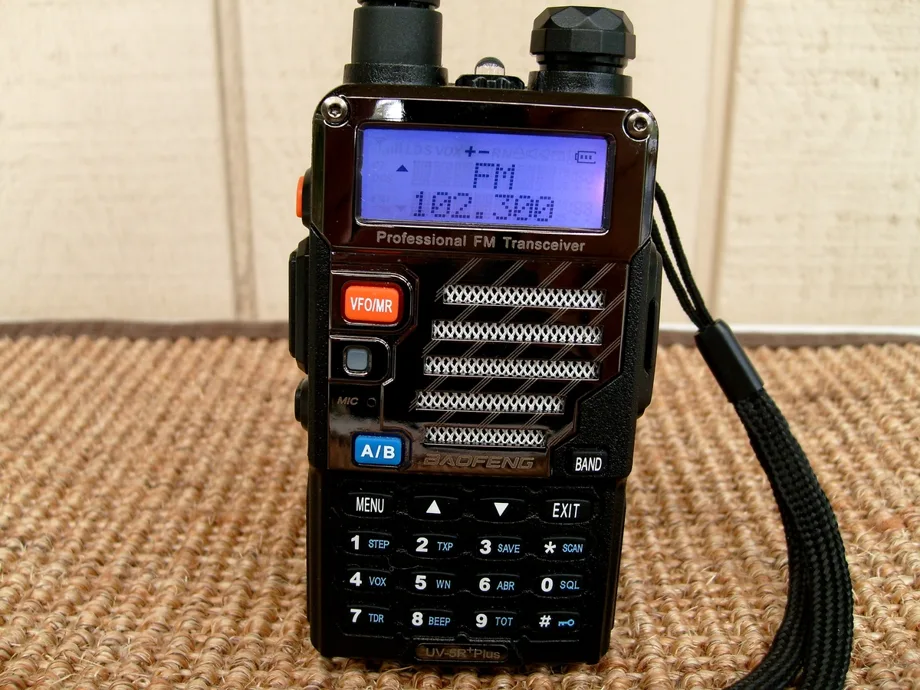
A handheld is a receiver and a transmitter in one. Turning the volume knob lets you listen. Holding the push-to-talk button, often marked PTT, sends your voice to anyone listening on that channel. Releasing it lets you hear replies.
Before you have a U.S. amateur license, you can listen to local amateur stations and practice the words off the air. For your first license, study for the 35-question Technician exam and book a session with volunteer examiners. Wait for your FCC license grant and call sign to appear in the licensing database before transmitting independently.
Try a five-minute listening log
Ask a local radio club when its next scheduled group check-in, called a net, meets. Listen for the station leading it, a call sign, and the pause before someone answers. Write down what you heard. If you don’t have a receiver, ask to listen with a club member or rehearse those three cues with a partner.
FCC control operator rule · Find a local club · Find a license exam
Lesson 2 of 4
Choose a radio path
- Direct or simplex
- Two radios take turns on the same frequency. They can continue talking if a local repeater loses power, provided they can hear each other directly.
- Through a repeater
- A shared station receives your signal and transmits it again, usually from a higher location on a second frequency. A licensed operator can use a compatible local repeater that the owner makes available. Ask the club for the repeater output (where you listen), input (where you transmit), any required access tone and local usage guidance.
An advertised mileage figure cannot tell you whether a signal will clear the hill between two homes. A higher, clear position or an outdoor antenna can help. A neighbor’s passive antenna improves the station connected to it. A chain of rooftop antennas alone cannot pass a message from house to house.
Compare two places
Sketch your home and a neighbor’s home. Mark a ridge or large building between them. Choose two safe, accessible spots to compare what you hear, such as an inside room and an open yard. Once both stations have licensed operators, test the path in both directions and write down which positions worked.
Lesson 3 of 4
Practice a check-in
Listen for a clear channel. On an organized net, wait for the person directing it to invite check-ins. Give your assigned call sign, a brief status and the next time you’ll listen. Pause so the other person can confirm what they heard. On a U.S. amateur voice contact, identify with your assigned call sign at least once every ten minutes during the communication and at the end.
“[Their call sign], this is [my call sign]. We’re safe at the meeting point. Our next check-in is at six thirty this evening. Can you confirm the time?”
“Six thirty” is easy to mishear as “six thirteen.” Have the receiver say the time back. Other people may be listening, so keep personal phone numbers and medical details off a routine group check-in.
Rehearse across a table
Leave the radios off. Read the example aloud, then swap roles. Have your partner repeat the time incorrectly once. Practice correcting the single detail and confirming it before you finish.
Lesson 4 of 4
Plan for a missed call
A check-in plan works when both people know what to do next. Agree in advance on a time, how long to listen, a second way to connect, and when to try again. Keep the plan on paper with the radio.
For example, two licensed neighbors agree to listen on their club repeater at 6:00 p.m. for five minutes. If it is unavailable, they switch at 6:05 to their agreed amateur simplex frequency for another five minutes. If that fails, they try a text when service returns and listen again at 7:00. Pick times and a fallback that work for your own household.
Make your own fallback card
Write your first check-in time and method, your fallback time and method, and your next attempt. Compare copies. Keep actual contact details on your own cards. If someone needs immediate emergency help and you can reach 911, call 911 directly. A neighborhood net has no guaranteed listener or dispatcher.
Open the free printable check-in cardCourse completion
Final knowledge check
Answer at least four of the five questions correctly to complete the course and earn 10% off the Ready Neighbors ham radio pair. You can review the lessons and try again.